
Intro
- Studies show that those who identify at LGBTQ+ are at greater risk for developing mental health disorders (Cochran et al., 2017; Needham, 2012).
- Little research exists on outcomes among LGBTQ+ populations, especially within an outpatient setting.
- One study exhibited similar outcomes among LGBTQ+ and heterosexual population in a Partial Hospital DBT program (Beard et al., 2017).
- This study aims to reveal if outcome differences exist based on sexual identification.
Methods
- N=ranges from 22-33 (10 people identified as non-heterosexual)
- Enrolled in at least 1 module of DBT from 2015-2018
- Measured pre and post test
1. Difficulty in Emotion Regulation Scales (DERS)
2. Patient Health Questionnaire-9 (PHQ-9)
3. Generalized Anxiety Disorder-7 (GAD-7)
Due to the small sample size, non-parametric Wilcoxon Signed rank tests were used to assess the differences in outcomes for both heterosexual and non-heterosexual patients over the course of treatment.
Results
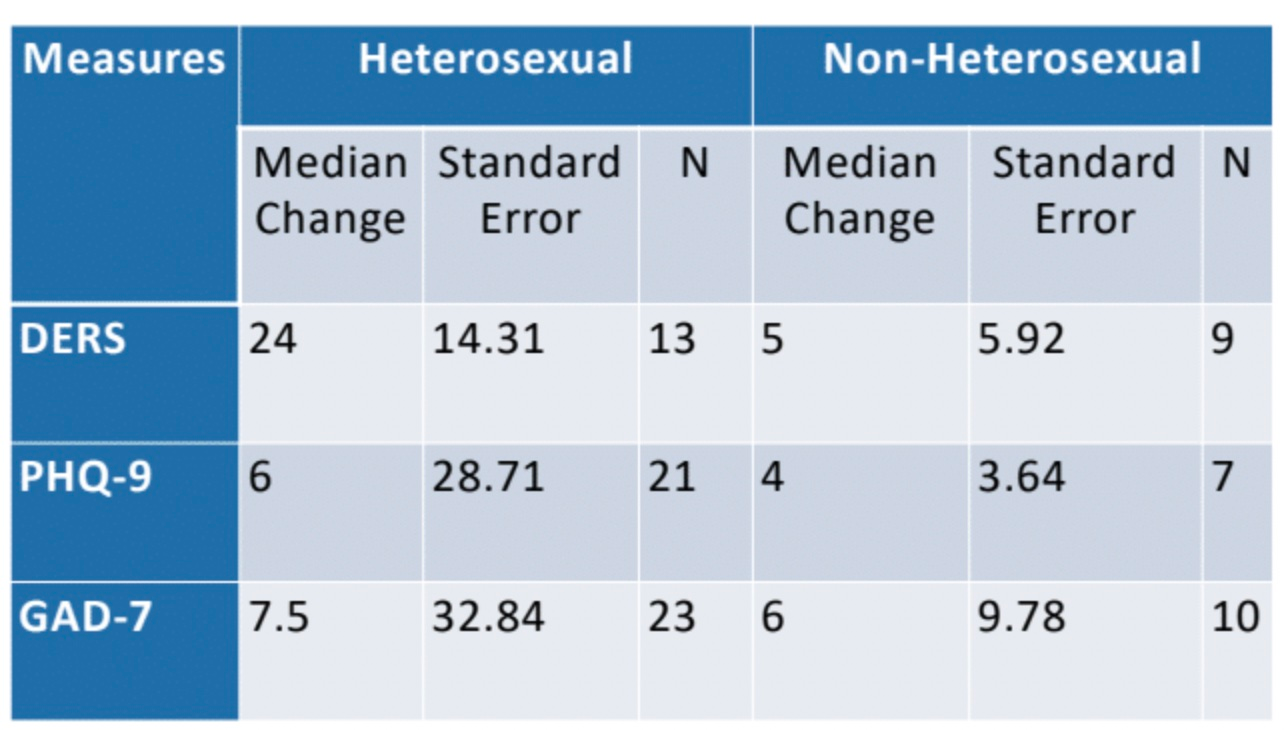
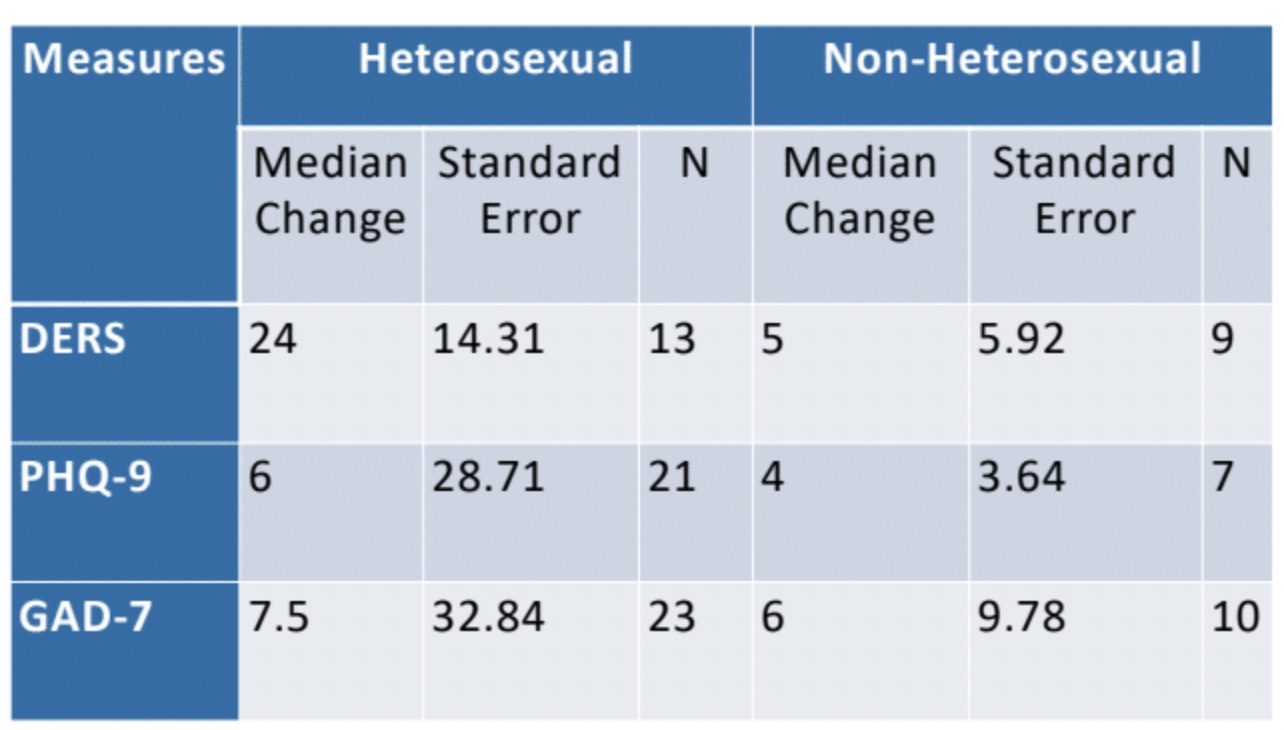
We found that there were significant decreases in DERS and GAD-7 scores for both heterosexual (DERS, p=.006, GAD-7, p=.006) and non-heterosexual (DERS, p=.028, GAD-7, p=.016) patients.
While heterosexual patients saw significant decreases in their PHQ-9 (p=.045), non-heterosexual patients exhibited improvements trending towards significance (p =.13).
Discussion
- Dearth research exists on non-heterosexual individuals within DBT.
- This study aims to close this research gap.
- Small sample size & lack of power
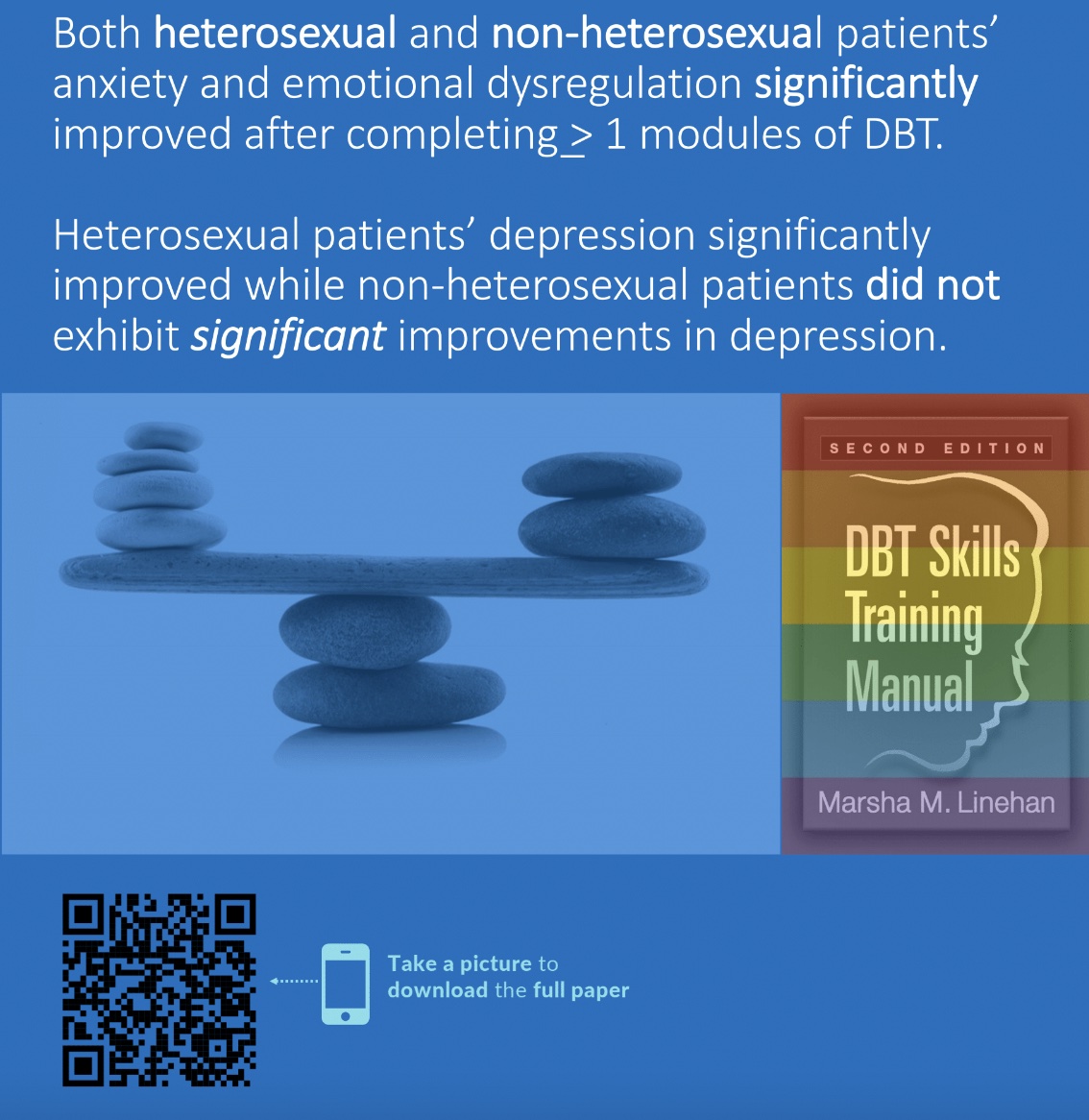
- All patients, regardless of sexual orientation, improved in their self-reported emotional regulation and anxiety.
- Future research should be conducted to determine the specific symptoms and items that improve over time vs. barriers to improvements in depressive symptoms.
- Future research should measure differences between DBT and LGBTQ+ affirming DBT.Research conducted by: Campagna, D., Loerinc, A., Montgomery, R., Silvers, M., Cohen, K., Chen, S., Mcfarr, L., & Rozmid, E.


