
Background
- High comorbidity exists between physical and mental health conditions, with especially high rates observed in those who meet criteria for Borderline Personality Disorder (BPD) 1
- Associations between BPD and chronic pain are recognized 2 but literature on DBT outcomes in clients with comorbid physical conditions (CPCs) is limited
Research Questions & Hypotheses
RQ1: Are baseline symptomatology different between clients with/without comorbid physical illness?
H1: At baseline, individuals with comorbid chronic physical conditions will have significantly more severe WSAS scores, but non-significantly different BSL scores compared to those without CPCs
RQ2: Are clinical outcomes between clients with/without comorbid physical illness different following DBT treatment?
H2: For those with CPCs, the rate of improvement over time will be significantly lower on the WSAS, but not significantly different on the BSL-23, compared to those without CPCs
Method
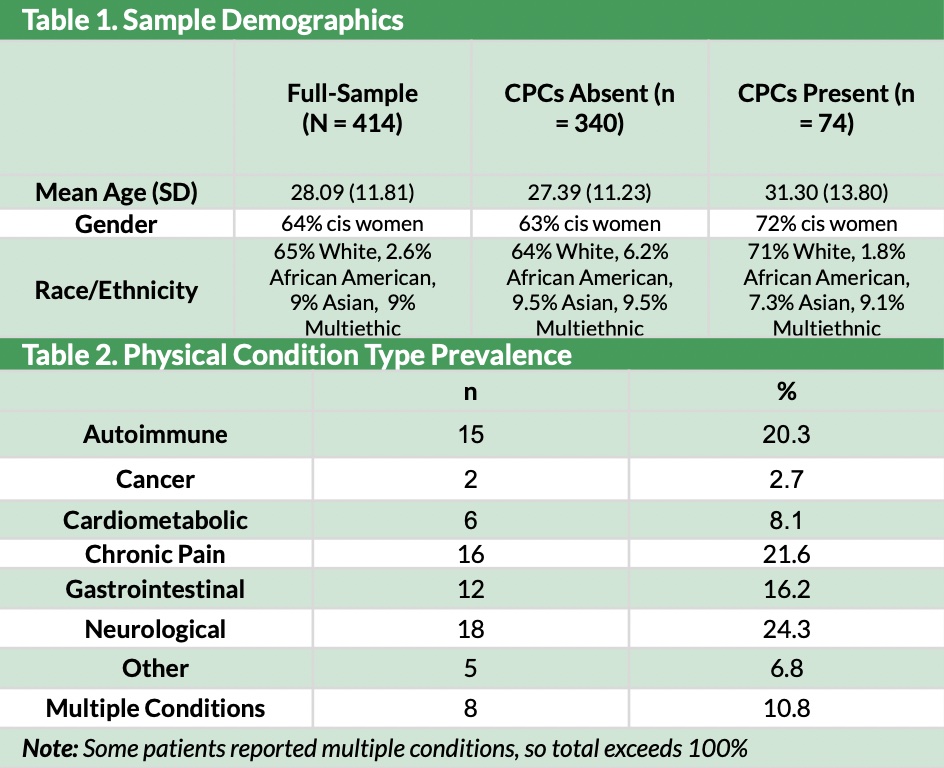
Participants: Individuals completing comprehensive DBT (6 & 12 month) in a private outpatient clinic in Southern California
Measures: Work and Social Adjustment Scale (WSAS), Borderline Symptoms List (BSL-23), Brief-COPE
Procedures: Participants completed measures at baseline and every 2-months across treatment. Participants were coded into two categories: physical condition present and physical condition absent.
Design: Naturalistic Exploratory Study Analysis: Multilevel Modeling
Results
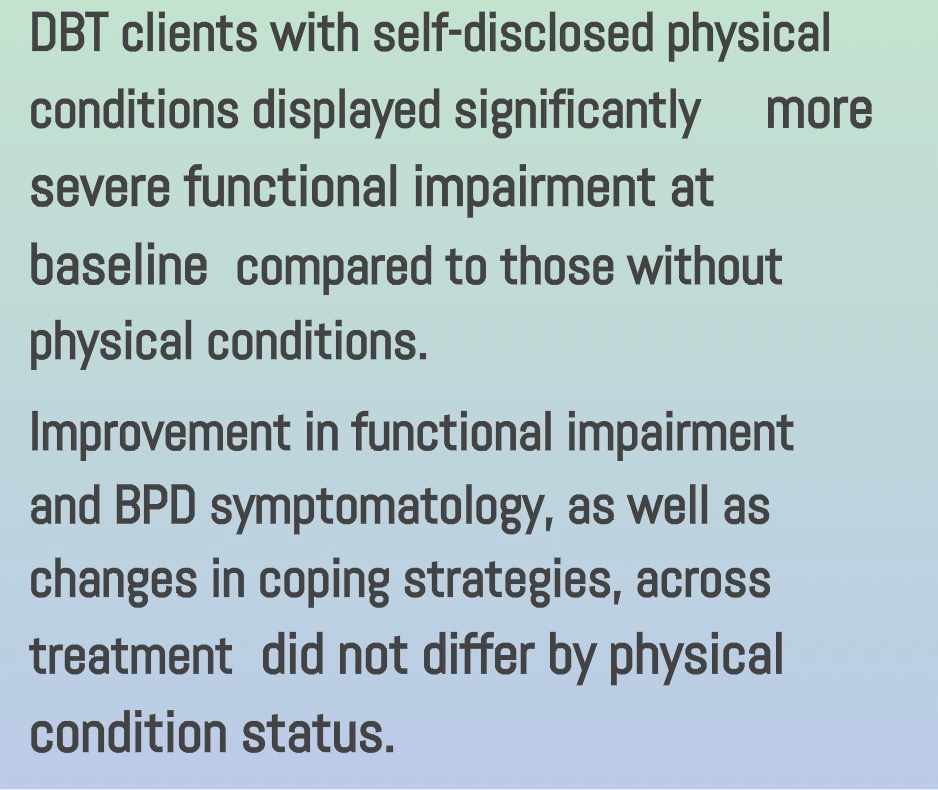
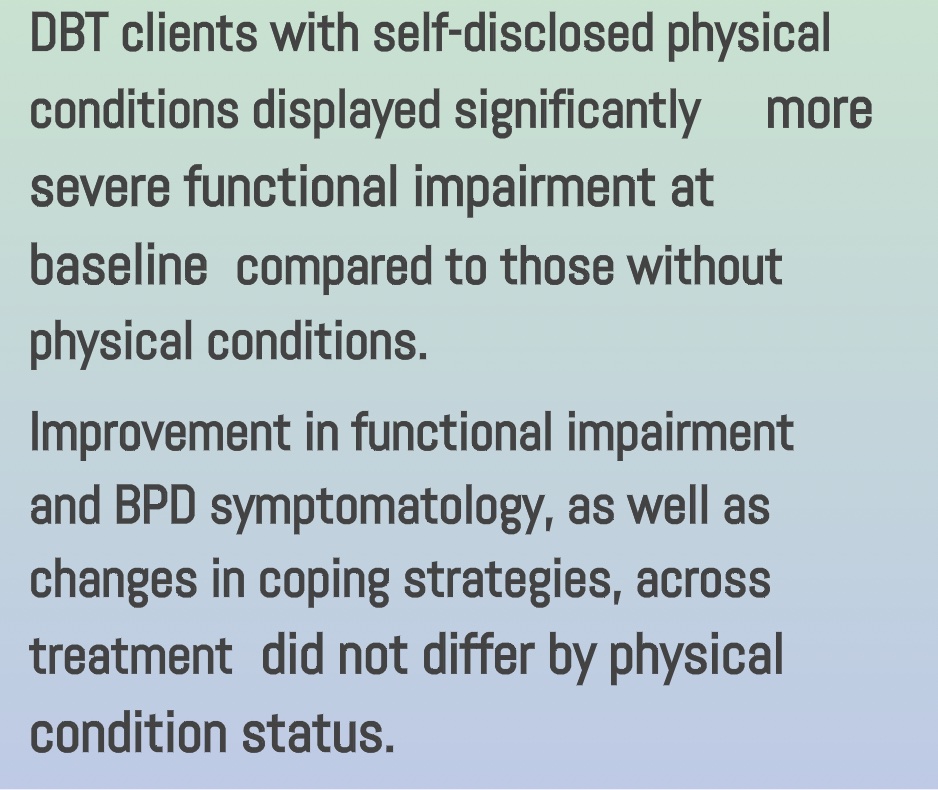
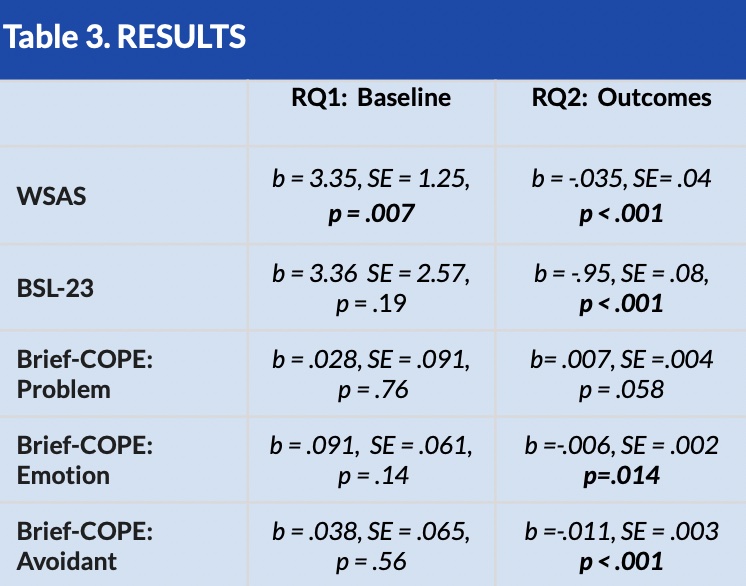
RQ1: At baseline, individuals with CPC displayed significantly worse functional impairment only.
RQ2: Significant improvements in functional impairment and borderline symptoms were observed per month in treatment. Significant decreases were observed in emotion-, and avoidant-, focused coping. No moderation effects were observed for CPC status for any measure.
Discussion
Despite DBT clients with CPCs reporting greater impairment when beginning treatment, our results suggest that DBT may be equally as effective for them.
Strengths: Real world sample, contributing to sparse literature examining links between physical and mental health conditions within the framework of DBT,
Limitations: Physical condition status was self reported without physician confirmation, high variability in self-reported physical diagnosis, limited n in disclosed physical conditions, limited diversity in those reporting CPC
References
1. El-Gabalawy, R., Katz, L. Y., & Sareen, J. (2010). Comorbidity and associated severity of borderline personality disorder and physical health conditions in a nationally representative sample. Psychosomatic medicine, 72(7), 641–647. https://doi.org/10.1097/PSY.0b013e3181e10c7b
2. Sansone, R. A., & Sansone, L. A. (2012). Chronic pain syndromes and borderline personality. Innovations in clinical neuroscience, 9(1), 10–14.
Research conducted by: Tonia de Barros Barreto Morton, B.A., Caitlin Hibbs, B.Sc., Sydney Lopez, B.A., Robert Montgomery, M.A., Alexandra King, Ph.D., & Lynn McFarr, Ph.D., CBT California, Los Angeles, CA


